Project
Winchester Mystery House
04
Overview


# Winchester Mystery House
Project
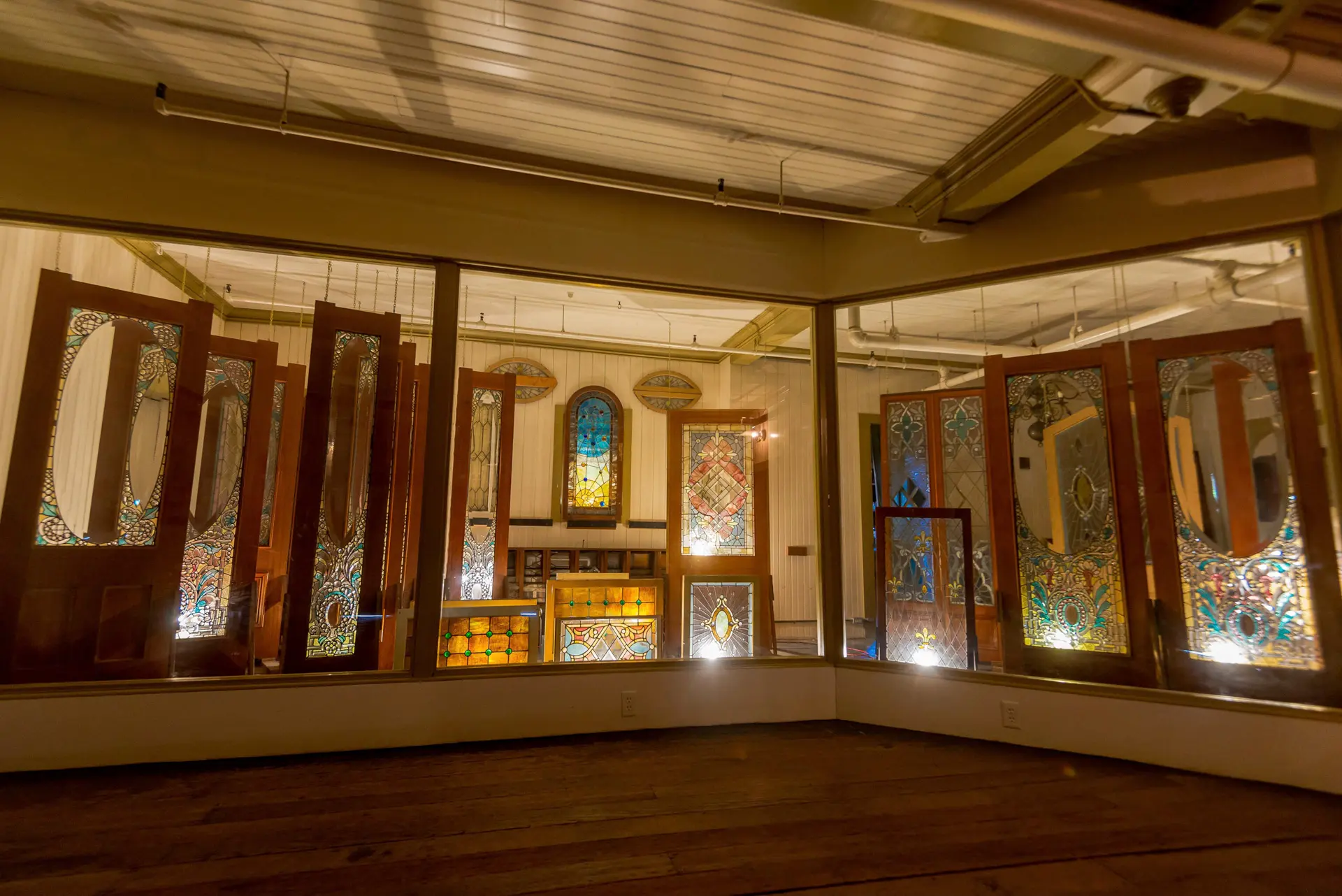
Exhibit Rooms
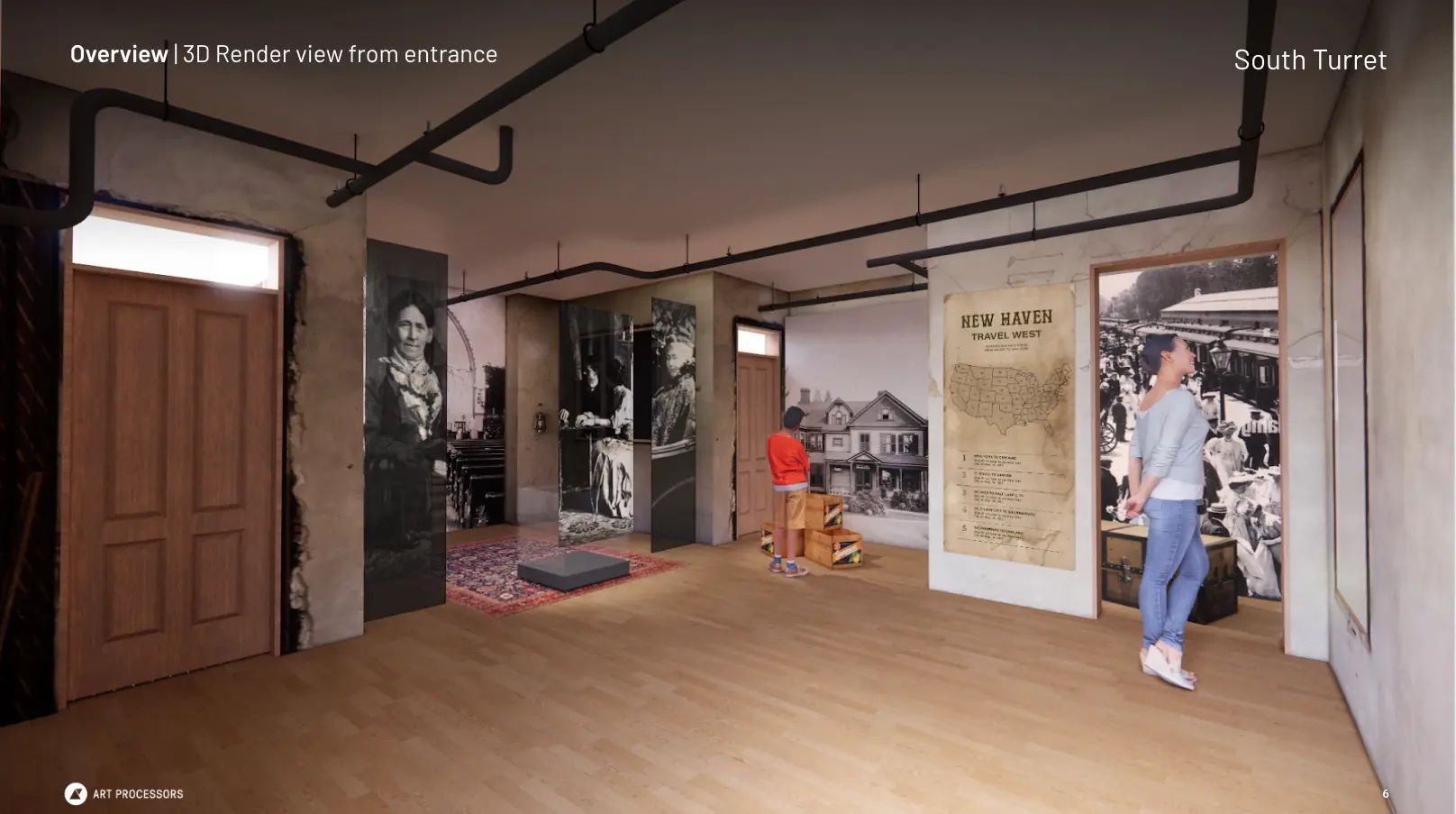
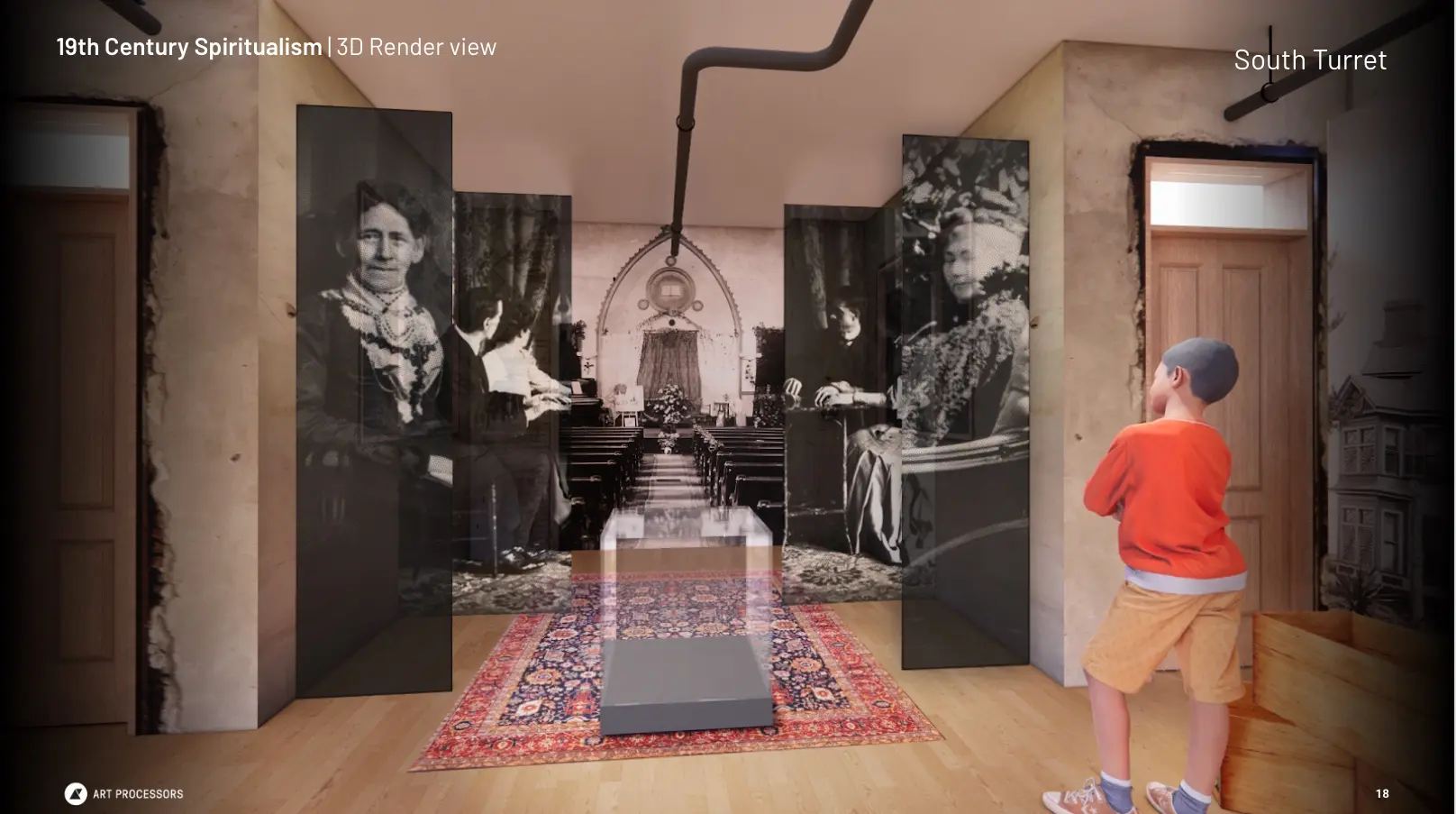
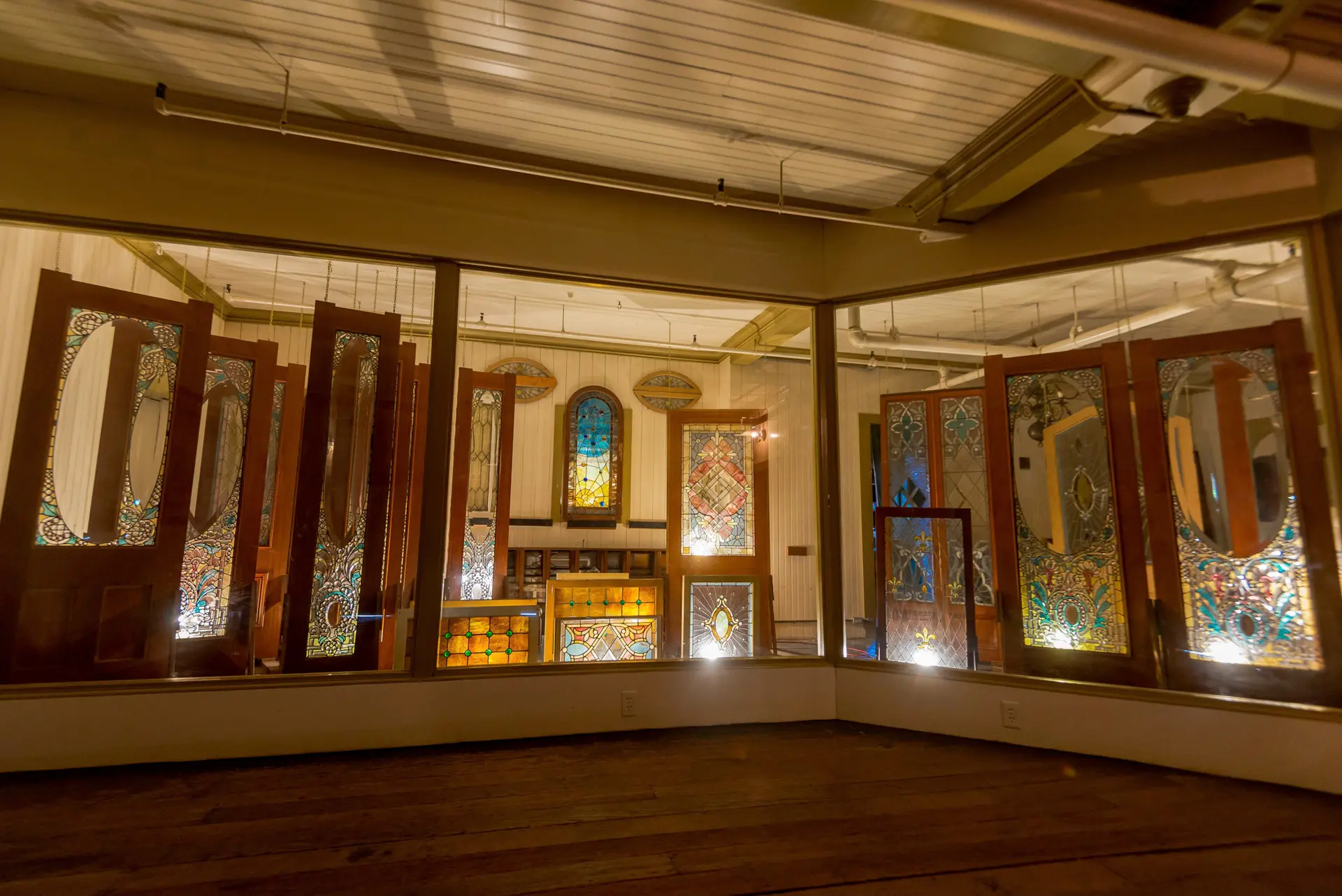
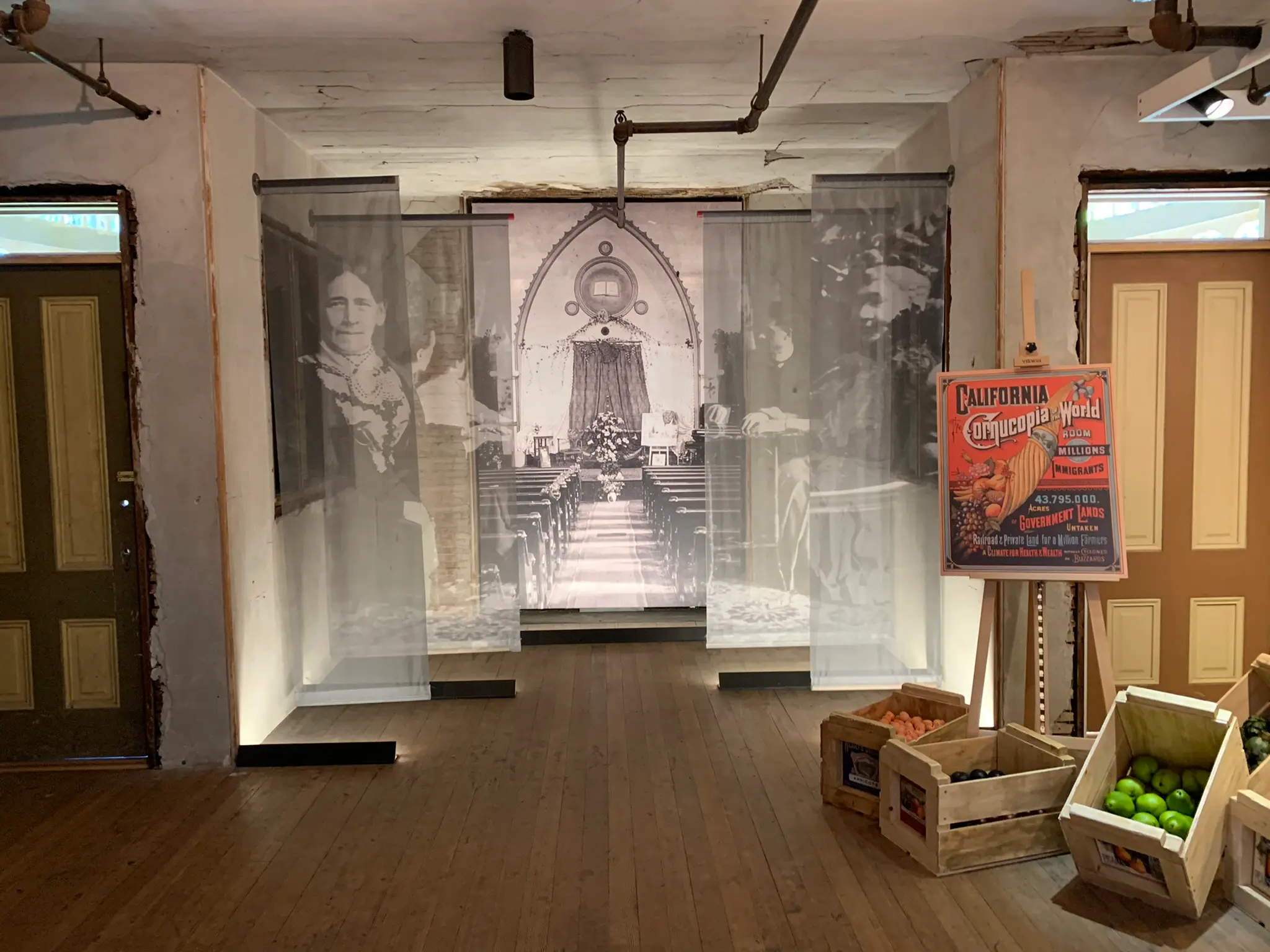
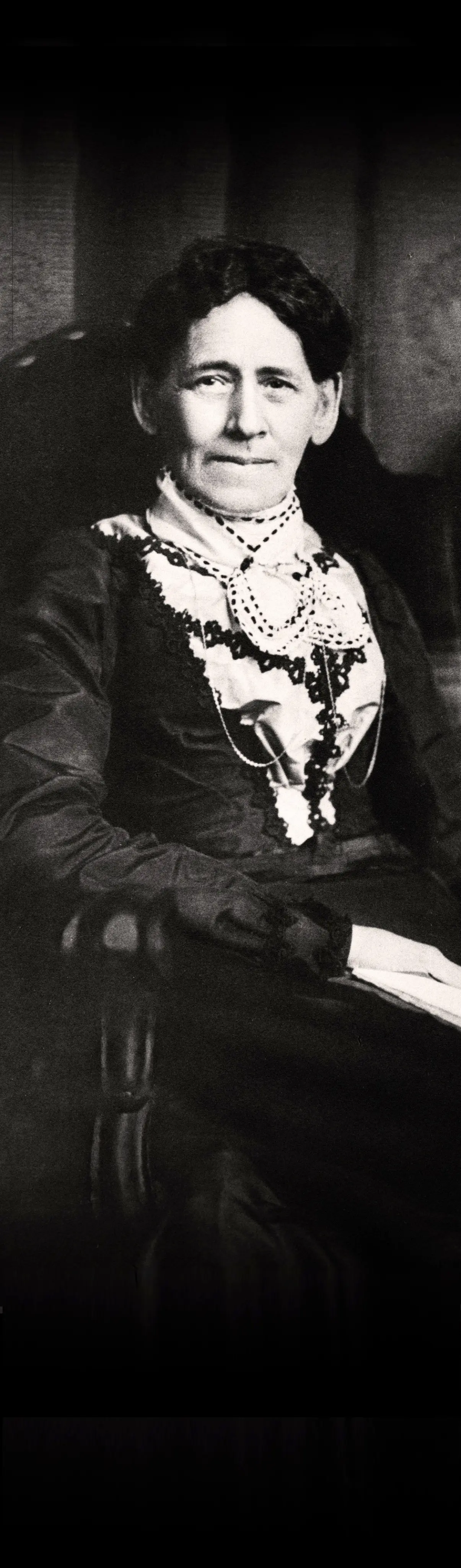
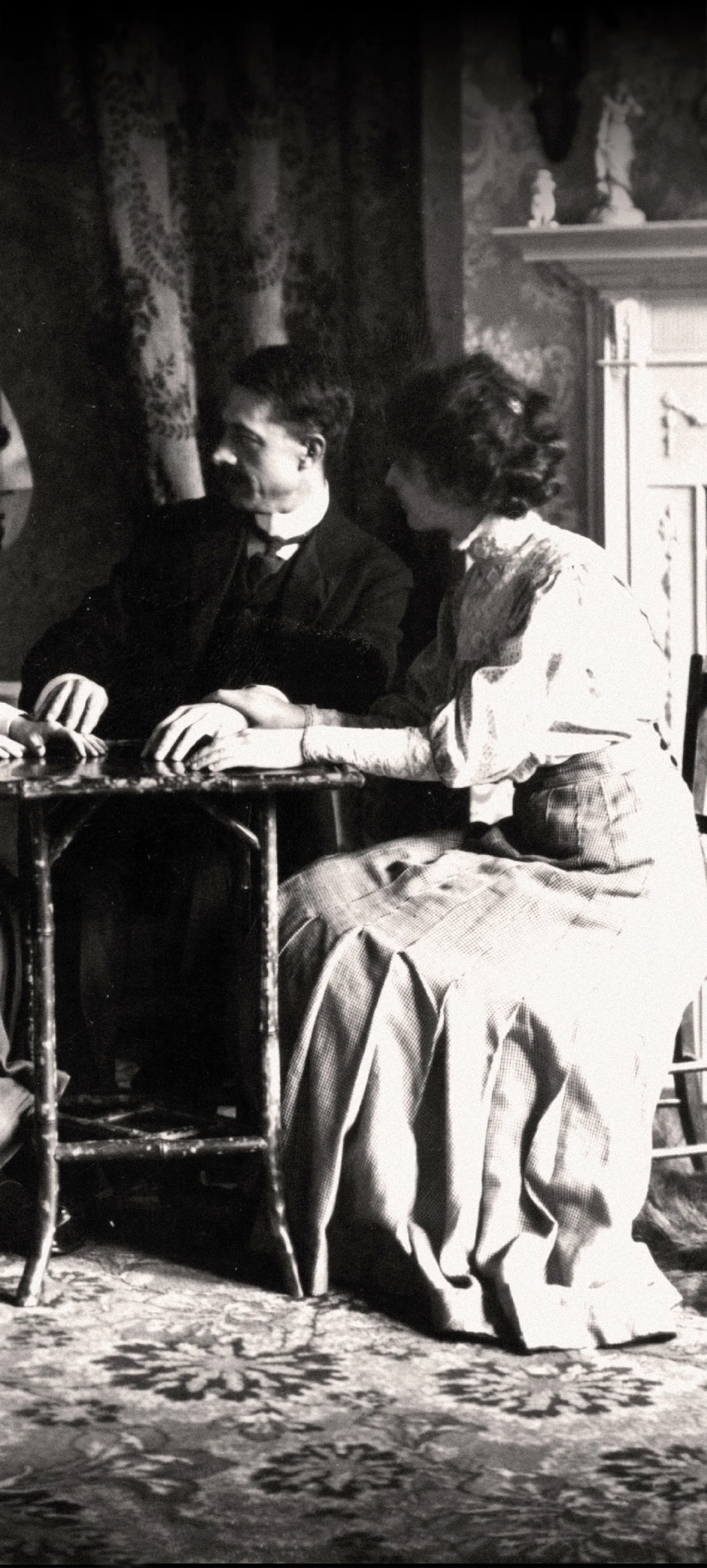
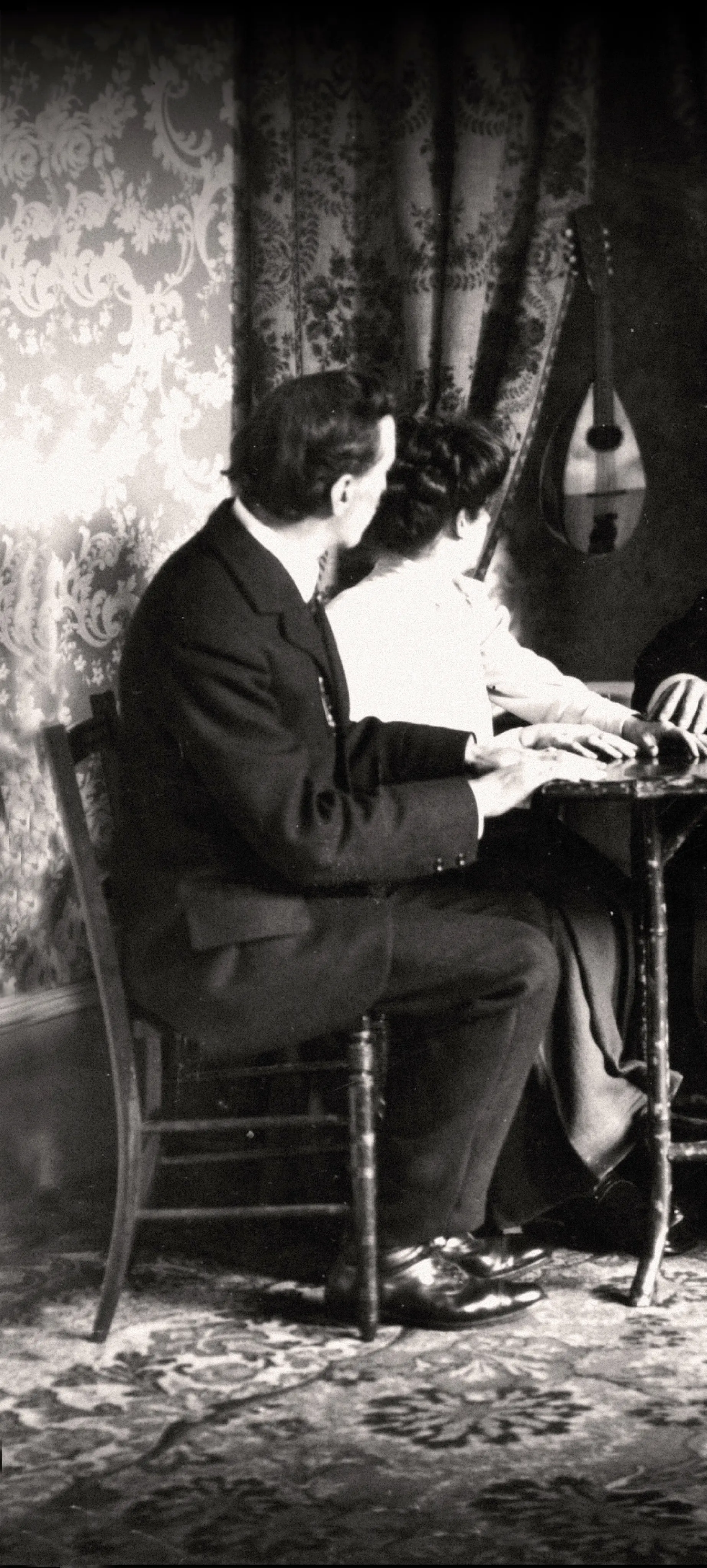
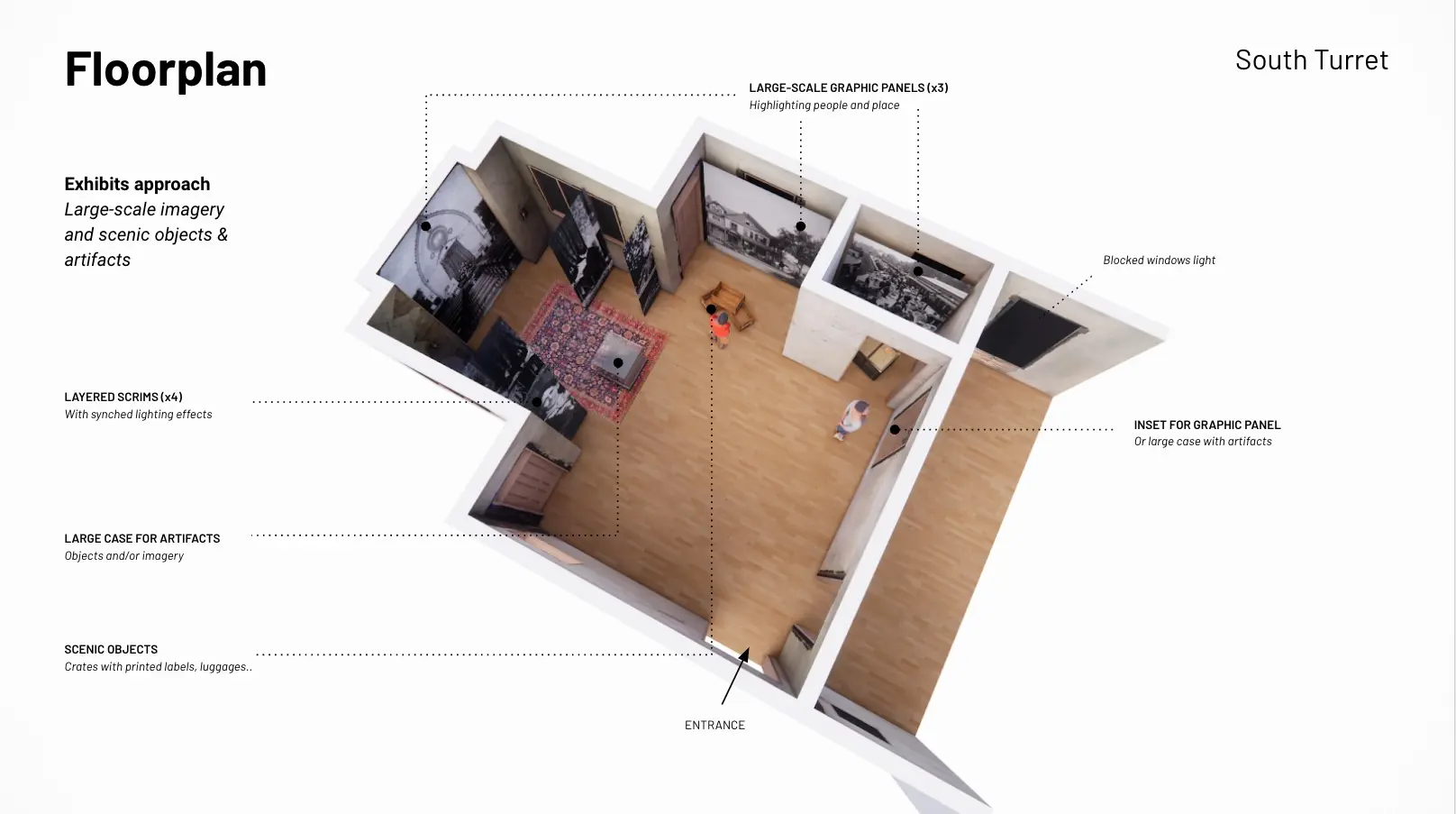
New exhibit rooms throughout the house pair large-scale historical imagery with scenic objects and artifacts: a room of Sarah Winchester's collected stained-glass doors, some backlit to show off their Tiffany-style detail; a scrim room where four layers of sheer fabric panels, each printed with historical portraits of the Winchester family, hang in front of a projected image of the house's chapel interior, with lighting synced across the layers to shift focus as visitors move through; and rooms combining vintage ephemera — fruit crates, travel posters, luggage — with large-format archival photography to place the family's story in the context of westward migration to California.
Ghost Effects and Basement Tour
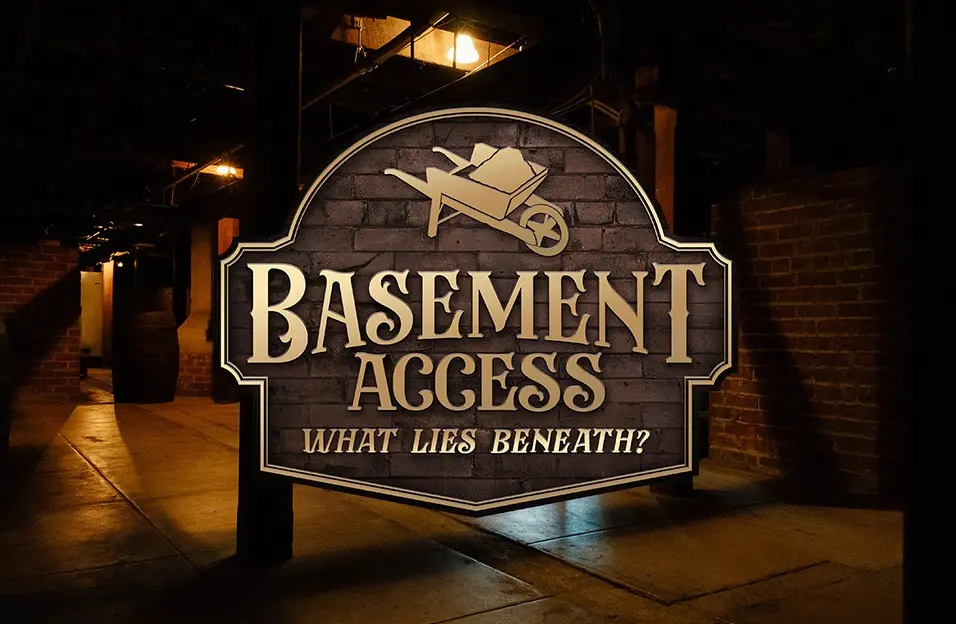
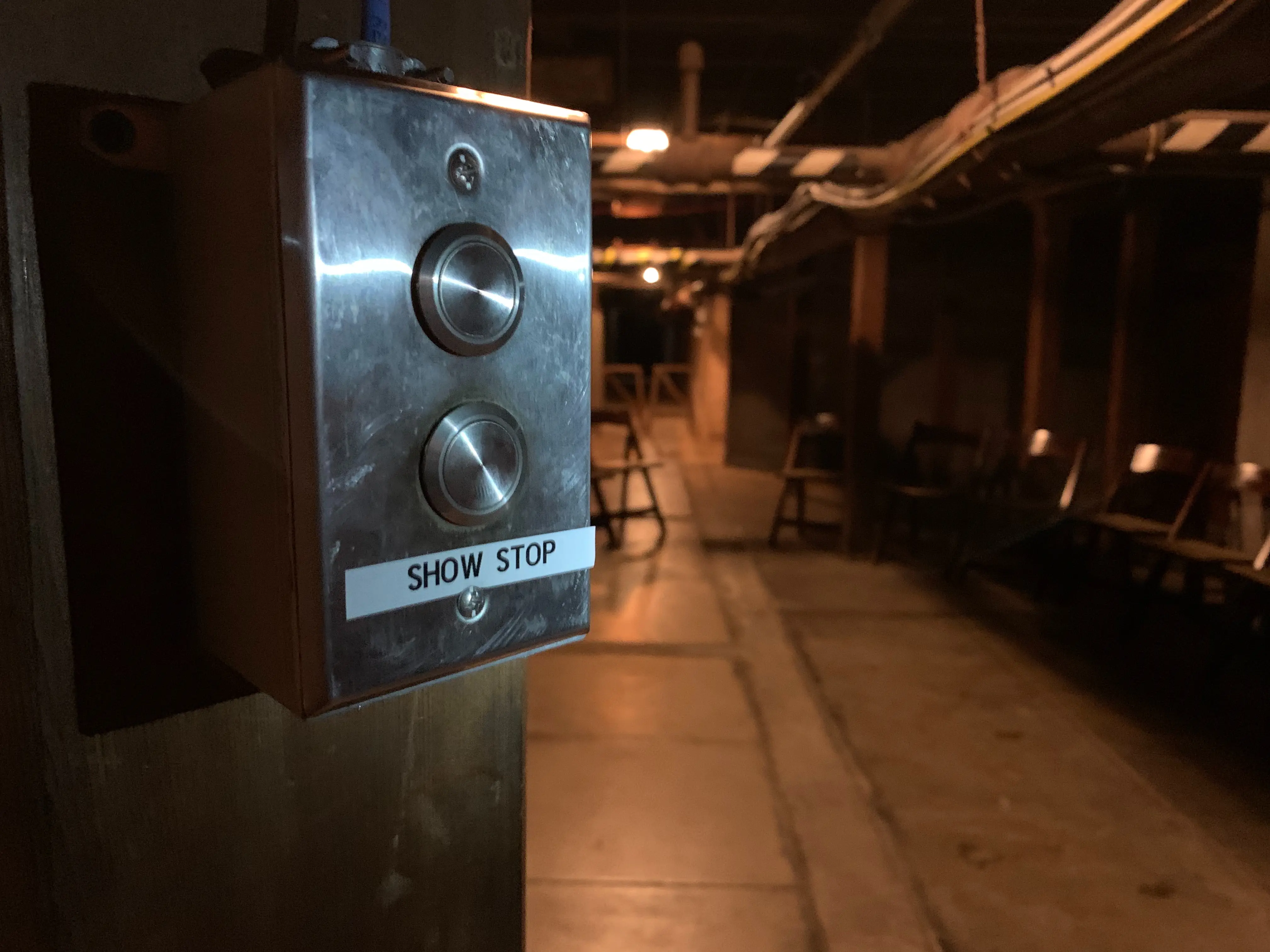
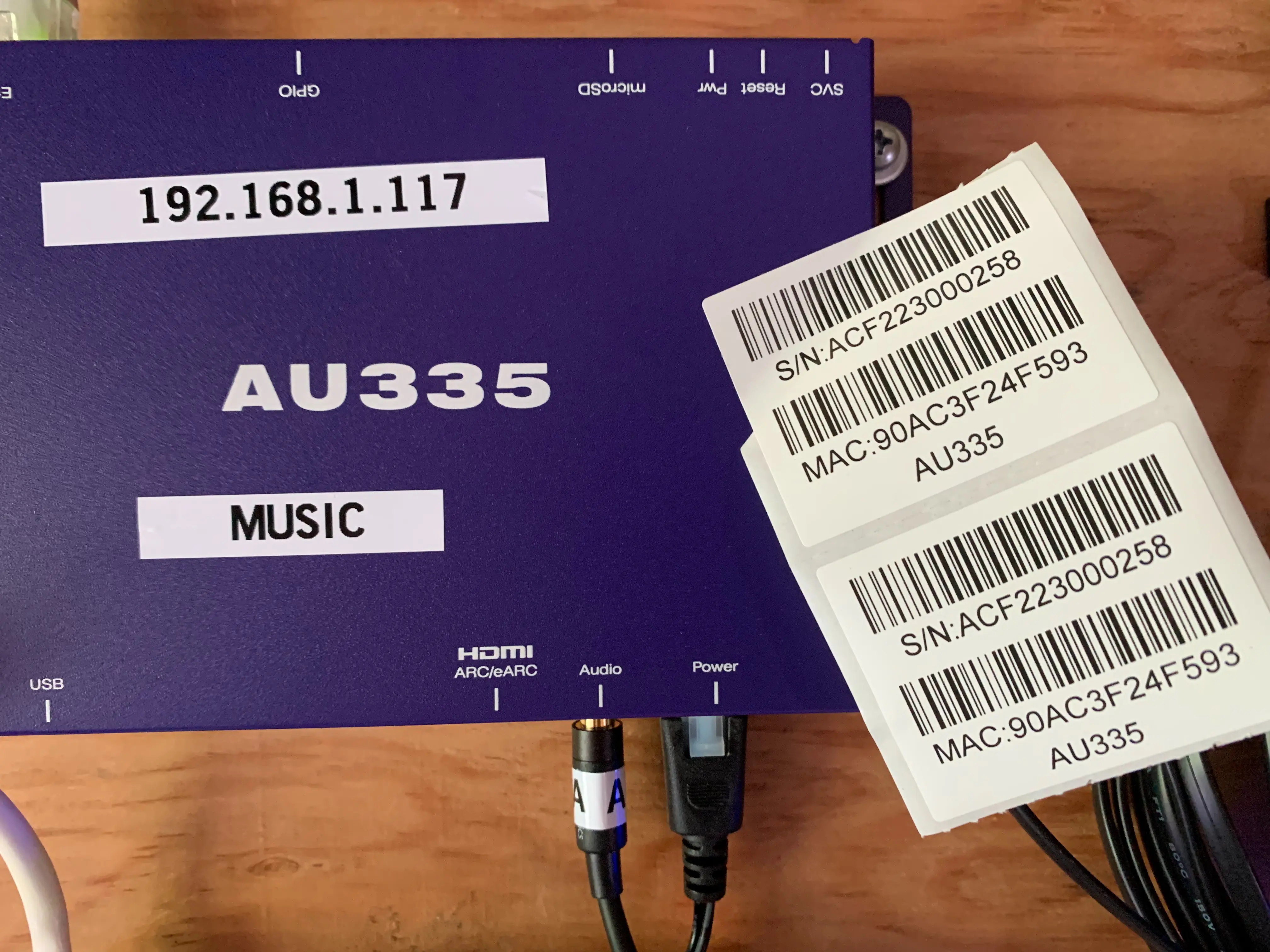
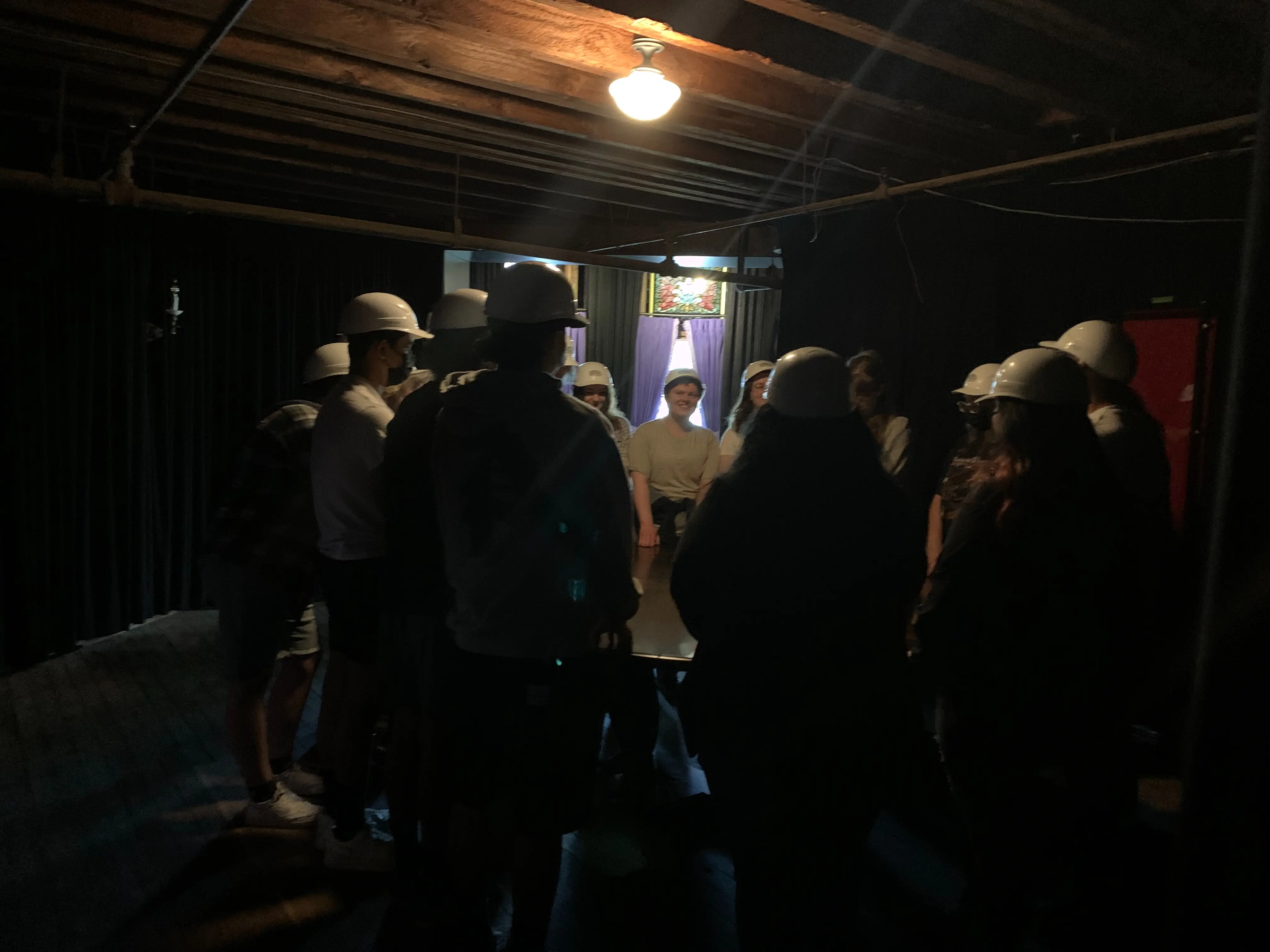
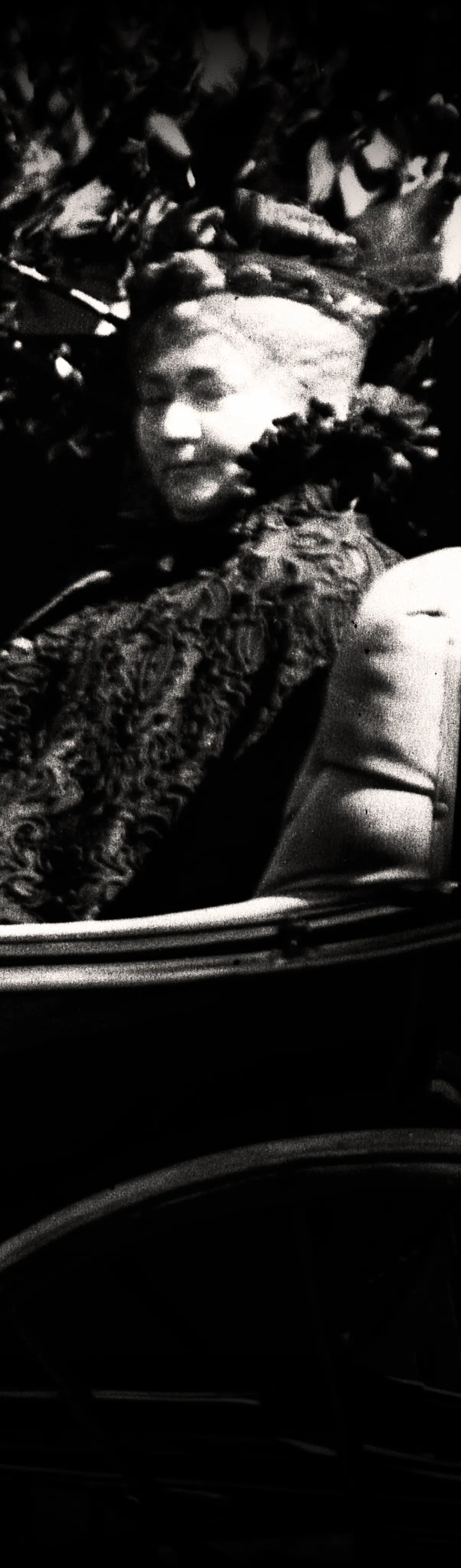
A rear-projected video effect brings a ghostly figure to life behind a set of antique stained-glass doors — hands pressing against the glass from the other side — timed as part of the nighttime tour's storytelling. The basement, marked by a "Basement Access — What Lies Beneath?" sign, houses a spatial audio system I helped install: synchronized soundscapes that play through the tour space and can be triggered or halted in real time by tour guides using a wall-mounted "Show Stop" control panel. The underlying playback hardware is a custom embedded AV control unit (networked over IP, with dedicated audio, HDMI, and GPIO connections) that keeps sound, lighting, and video cues in sync as guides lead groups — some wearing hard hats for the basement portion — through the darkened space.
Technical Approach
- Synchronized multi-room playback: Soundscapes, lighting, and video effects are coordinated across multiple rooms so ambience shifts smoothly as a tour group moves through the property.
- Spatial audio in the basement: A dedicated audio system was installed to create directional, immersive sound in the basement tour space.
- Guide-operated controls: Physical "Show Stop" hardware gives tour guides a simple, reliable way to pause or halt effects in real time during a live tour.
- Reusable for regular and event programming: The same soundscape system supports both standard daytime tours and higher-intensity special events like Halloween.
My Role
I worked on UX, UI, software, and integration — helping design the sequencing of soundscapes, lighting, and video across the tour route, installing the basement's spatial audio system, and integrating the guide-facing controls that let staff run the experience live.
Figures